Wednesday, August 19, 2009

Favre is guilty of waffling, but the Vikings played along

ON FOOTBALL

The Brett Favre Summer Circus Part II, I believe, has finally reached a conclusion.

The 39-year-old did Tuesday what he declined to do three weeks ago, signing a pretty decent contract to be the Minnesota Vikings quarterback for the next two seasons.

And needless to say, this news has aroused a lot of anger toward Favre from Bangor, ME, to La Jolla, CA. A lot.

First off, there are members of the general public who are sick and tired of hearing about Favre. At this point, they'd rather read about Michael Vick. They don't care if he can still gunsling a ball between four defenders to a wide receiver in a crevice not big enough to fit two five-year-olds.

They just want him out of the NFL, out of their consciousness, off their fantasy boards.

Then there are the millions of Green Bay Packers fans in this country, who were already fed up with their ex-legendary QB and now probably want to banish him from the state of Wisconsin for signing with a team in their division. The only thing worse, in their minds, would have been if he'd tied the knot with the hated Bears.

There will be no love for No. 4 when he leads the Vikings into Lambeau on Nov. 1.

I, for one, am no big Favre fan, either. Turning down a good offer from an excellent team with the league's best running back and then changing his mind during the middle of training camp ain't cool — regardless of how dire the Vikings' signal-caller situation would be without him.

Favre has gone about this the wrong way, waiting, just about, until the final minute to decide to play.

But here's what I will say in his defense: I don't blame him one bit for wanting to continue to play. The general public, the haters, don't understand that this is his career, his livelihood, and once he gives it up, nothing in life, sadly but true, will ever match it.

Favre still has the physical tools to compete in the NFL, especially now that his throwing arm is healed from the torn biceps tendon that hindered him down the stretch of last season as the Jets quarterback.

He also, I'm sure, remains one of the toughest, grittiest players in the league. A player who won't crumple when he sees a raging defensive end flying at him. Instead, a player who will step up and complete a pass before getting decked.

The bottom line here is that the Vikings wanted Favre at almost any cost. They were willing to wait until mid-August for him. They were happy to pay him $25 million over two years. Heck, they might have even accepted him mid-season.

The rest is, will be, history.

If there had been no offers on the table, if no team was showing serious interest in Favre over a month ago, this saga would have peacefully died. He probably wouldn't have gone to the trouble to have his arm examined by Dr. James Andrews. He would have concluded that his football career, outside of Sunday flag-football leagues, was over.

But Minnesota management was smart. It knew that Tarvaris Jackson or Sage Rosenfels wasn't going to lead the Vikings, even with Adrian Peterson, to the Super Bowl. It knew the team needed a quarterback who could strike fear in opposing defenses behind center, a QB that could keep defenses from constantly putting eight or nine defenders in the box.

So the Vikings expressed their interest in Favre, making it clear that they wanted him badly — as their starting quarterback, no ifs ands or buts.

And here we are, almost three weeks from the beginning of the regular season, with Brett Favre in purple.

He'll be booed plenty this season and every one of his miscues on the field will be dissected by those who'd rather see him stocking shelves in a grocery store this October.

But he also might have one heck of a season with a pretty darn good team, a season that far outweighs any more bridges he's burned with this latest comeback story.

Thursday, August 6, 2009

Rashard Lewis' apology right on the money

ON BASKETBALL

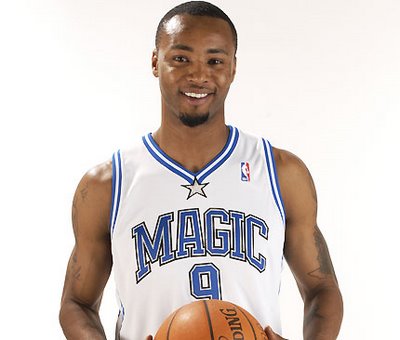
Thursday was not a good day for Rashard Lewis, Orlando Magic small forward.

The man who helped the Magic to the NBA Finals was suspended by the NBA for 10 games for testing positive for an elevated level of testosterone.

But Thursday was also a good day for Lewis, in that he went about facing the suspension in the right way — and next spring, when the Magic are battling in the playoffs, no one will give a flying hoot about the suspension or even remember, for that matter, that the dude had some extra testosterone.

And if Lewis has a long, successful career, I doubt Thursday will keep him from being strongly considered for the Basketball Hall of Fame in Springfield, Mass.

If only baseball players, the whole lot of the accused, could look at Lewis' reaction to his positive test, get a "Back to the Future" car, and unravel all the damage they've done to their careers and legacies through lies and denials.

Lewis, unlike countless famous sluggers, came out and said exactly what happened — he took an over-the-counter supplement late last season that contained a substance he didn't know was banned by the league.

I, for one, believe his explanation.

What he did, of course, was extremely stupid. Any professional athlete worth millions should know about the risks associated with making such a purpose. Heck, they should just stay away from over-the-counter supplements, period.

But Lewis bit the bullet, swallowed his pride, and admitted his fault. And that will, no doubt, help him in the court of public opinion. Once he's served his suspension, people will quickly forget about what happened.

He's helped by the NBA's reputation of being a PEDs-free league. We only hear, really, about maybe one player a year, usually a bit player, testing positive for something. Lewis is the biggest-name guy who's been named.

Because of the league's rep, it's easier to believe that Lewis didn't know exactly what he was doing. And it's easier to accept that his apology is genuine, unlike the crap we hear from most baseball players.

"I hope every athlete can learn from my mistake that supplements, no matter how innocent they seem, should only be taken after consulting an expert in the field," Lewis said in his statement.

Warning other athletes? Not hiding behind his agent?

It's a new approach that we haven't seen from baseball players.

Let's not forget that when Mark McGuire, Sammy Sosa, Alex Rodriguez and others were taking supplements, the PEDs weren't banned by Major League Baseball. If they had just come out and admitted what they'd done and said it was wrong, that they made a mistake, they might not be in such hot water with hordes of baseball fans, not to mention Hall of Fame voters.

That's what lying and denying will do.

Rashard Lewis doesn't deserve a free pass on this one. That's why he's getting docked 10 games, or $1.6 million.

But his solid reputation should remain intact, as will the NBA's as a mostly PEDs-free league (for now), thanks in part to how he handled making an error in judgment.

If only baseball's steroid users had taken a similar approach, they might not be so reviled. Their mistakes might, actually, be distant memories.

Thursday, July 30, 2009

Baseball's executives embarrassing themselves with each leaked name

ON BASEBALL

This is getting downright silly, and it's making Major League Baseball look, well, silly.

So thanks to one of the outlets that keeps us informed — at least most of the time — David Ortiz, "Big Papi," tested positive for performance-enhancing substances in 2003. Oh, and Manny Ramirez, no surprise, had a positive test then, too, according to the New York Times report.

These are just the latest names to be released — and there will be more.

You see, in 2003, before using PEDs was punished by MLB, 1,198 players were tested. Apparently, over 100 tested positive. The names were never supposed to be released.

But since February, when we were hit by the A-rod bomb — and the slugger admitted to using PEDs — we've learned of others who failed the test, the big ones being Sammy Sosa and now Big Papi.

And think about this — there were more than 100 names on that list.

If we keep going at this rate, we'll still be hearing names 15 years from now. Is that, really, what MLB wants?

The right thing to do, before this public-relations disaster that was already a disaster becomes even worse, was what was pledged — keep the results of the test confidential. After all, it was just a survey to determine if mandatory testing was necessary (the answer, obviously, was yes).

But now that the names are leaking, and low-paid reporters continue to dig up dirt, the only semi-right thing to do would be to publicly release the rest of the names.

If the people running MLB want the league to get past this tainted, dispiriting, distrusting era, that's the only option. Get all the names out there, let them simmer for a month or so, and then everyone can move on and hopefully enjoy a dramatic playoffs.

It doesn't, however, look like that's going to happen. So what will happen is, more names will continue to be dug up. Maybe they won't be big names, maybe they won't be heroes like Ortiz who was headed, prior to Thursday's report, to the highest annals of Red Sox history.

But they will be names, just the same, and they'll continue to remind the public that baseball players can't be trusted when they say those pitiful, lames words: "I never took steroids."

It's sad that the majority of today's players, especially the young guys, don't have the trust of the public and might never have it if names continue to be leaked for the next five to 10 years (or even longer).

I don't think a large percentage of players are using PEDs at the moment. But until we stop hearing names tied to the drugs, until we stop witnessing the falls from grace of so many past and current heroes, it will be near impossible to believe the Steroids Era is behind us.

And that, like everything else about this mess, is a shame.

Tuesday, July 21, 2009

The NFL: Where second, and third, chances are commonplace

ON FOOTBALL

Lost behind the biggest NFL headline of this week, the end of Michael Vick's prison sentence and home confinement, was this little nugget:

Chris Henry is still in the NFL, still a wide receiver for the Cincinnati Bengals, and, apparently, doing very well and staying out of trouble.

I was shocked when I read the news the first time, so I found another source. And sure enough, the 26-year-old is behaving well both on and off the field and receiving praise from teammates, including respected quarterback Carson Palmer.

In case you don't know Henry — or, smartly, chose to expunge any thoughts of him from your brain — he's a young, talented wide receiver out of West Virginia. He was also one of the dumbest, most immature professional athletes in this country.

I thought he'd never change.

His rap sheet reads like this (it'll take a minute):

— Dec. 2005: Pulled over for speeding. Marijuana found. Driving without valid license or insurance.

— Jan. 2006: Arrested for multiple gun charges, including concealment and aggravated assault.

— May 2006: Investigated for an alleged sex crime that occurred in a Kentucky hotel room, but no charges were filed.

— June 2006: Pulled over and had a blood-alcohol content level above the legal limit.

— Oct. 2006: Suspended two games by the NFL for violating its personal conduct and substance abuse policies.

— Jan. 2007: Pleaded guilty to providing minors with alcohol during a 2006 incident.

— April 2007: Suspended eight games by the NFL for violating its personal conduct policy and is given a warning that more problems could end his career in the league.

— Nov. 2007: Allegedly assaulted a valet.

— March 2008: Allegedly punched a man and threw a beer bottle through the man's car window. He was waived by the Bengals a day after the arrest.

Got all that?

Granted, many of the incidents above don't exactly make Henry the worst person in society. If I had a dime for every fraternity brother who has hooked up minors with booze, I'd be retired and living in an O.C.-like mansion.

Still, during a two-year period Henry showed no signs of learning his lessons and being a law-abiding citizen. He continued to take his life of fame and money for granted and think he was above the law.

And he came pretty close to misbehaving his way out of the NFL.

But Bengals management has a history of taking in players with character issues, and that's what it did again before last season, re-signing Henry in a move that I called ludicrous at the time.

How could the team know he'd get his act together?

That, however, is exactly what's happened over the past year. Now who knows for sure what will become of Henry, but judging from what others are saying and just not him, he's finally turned that corner and could be a productive citizen.

On about his eighth chance, give or take.

Now, of course, NFL commissioner Roger Goodell's focus is on Vick and whether he should reinstate the former Atlanta Falcons quarterback who ran a dogfighting ring and helped in the killings of underperforming dogs.

I really don't know what Goodell will do. I guess it depends on whether he thinks 23 months of prison and home confinement changed Vick into a morally positive man.

I also don't know if that's the case. I'd have an extremely hard time forgiving someone for such acts, and I can't even imagine what would push someone to do something so heinous for two years.

What I do know is that the NFL is good at giving second chances.

Just look at Henry's case. He's not one of the most talented players in the league and he's never had close to the fame that Vick had when he was the star of the Falcons and was making Nike commercials in his spare time.

But he was never suspended indefinitely from the league, and the Bengals gave him that extra chance that might just have awakened him to how close he came to being ignored by the entire league.

Vick's crimes, obviously, are much worse than anything Henry did. Henry didn't kill anything and didn't badly hurt anyone (although he endangered others by driving recklessly).

But if Vick is truly repentant and ready to be an honest man of integrity, someone who will genuinely speak out against acts such as the ones he committed, why shouldn't he deserve a second chance in the league?

I won't criticize Goodell either way. He's the person who will sit across from Vick and look into the man's eyes.

And I won't criticize any of the 32 teams that passes on signing Vick if he is, indeed, reinstated. I don't care how badly a team needs a quarterback — why would management put itself through the PR nightmare of signing the guy?

I surmise one of the morals of Vick's story, at the moment, is that the more famous you are, the harder it is to bounce back after a dreadful crime. If a lesser-known player had committed the terrible acts, he probably wouldn't have gotten so much negative publicity.

But if I were Vick right now, I'd look at players like Henry and Leonard Little — He crashed into and killed a woman while driving drunk in 1998 and then drove while intoxicated, and speeding, again in 2004; yet he's continued to play for the St. Louis Rams and hasn't had any more off-the-field problems — and be confident about getting another chance in the league.

Just not now.

As has been reported, his best chance this fall might be in the new UFL, whose coaches have shown interest. Playing in the four-team league would obviously be six steps down from the NFL, but it'd be a good start for a reconciled Michael Vick.

And maybe, in a year or two, I'll look at Vick, in an NFL uniform, and see another young man who benefited greatly from getting another chance, or two — deserved or not — in life and on the football field.

Wednesday, July 15, 2009

This time around, Brett Favre's following the correct process

ON FOOTBALL

So Brett Favre is considering playing again...

Blah, blah, blah.

Just give it up, dude.

You're tainting your legacy and creating a headache for another team.

I'm paraphrasing a bit, but that's what a lot of people in and outside of the NFL are saying of the 39-year-old Mississippian.

But hold on, dudes. Favre isn't Jose Lima, who — last I heard — was trying to play his way back to the majors from the lowest level of semi-pro baseball.

No, the Minnesota Vikings want Favre (if he's healthy). Not only that, they're giving him until the beginning of training camp July 30 to make up his mind.

That, coincidentally, is what Favre said he will do. He still isn't certain that his surgically-repaired arm is healthy enough to sling missiles all over a football field for 16 (or more) games. He wants to make certain that he can he be the old, soon-to-be-in-the-HOF Brett Favre before he commits to another season.

Sounds mature, wise, sage, like smart thinking. So what, exactly, is Favre doing wrong?

For a lot of football fans, he's simply been on the scene too long. He's played a ridiculous 18 seasons, which is probably about 15 more seasons than the average NFL player lasts.

Fans want to see new blood, want to watch the Matt Cassels of the league get all the focus.

To which I respond, You must be crazzzy.

Name me five NFL quarterbacks who generate more excitement than Favre, who throw improvised shovel passes like him, who throw into triple coverage ... and completes it (occasionally).

Yeah, give me another year of Favre, because dudes like him don't come around very often.

Plus, he can still play — if that arm is healthy. All anyone wants to remember about last year's Jets is how they flamed out, led by Favre, and missed the playoffs after having first place in the AFC East on lock.

Sure, Favre was terrible during those final four games. But he wasn't close to healthy, either. A year ago, when he was "unretiring," he thought he could go back out and do what he'd done his entire career without pain.

He learned that hard lesson last December.

Now, Favre is going through the correct process to assess whether he can endure a full season for the Vikings. It stinks for Minnesota that it has to wait until August to know about its possible starting quarterback, but that's a choice management made and is sticking to.

And a good one, at that.

I'm having a hard time thinking of the Vikings' alternatives at quarterback, so I'll go out on a limb and say Favre would be an upgrade. And he'd give them a legitimate shot to win the usually horrendous NFC North — and anything, as the Cardinals proved once again last January, can happen in the playoffs.

So go ahead, if you'd like, and boo and hiss Brett Favre.

But he's doing nothing wrong.

And I, for one, wouldn't mind watching him lead the Vikings onto the Frozen Tundra on the first day of November.

I'm sure the executives at FOX would be quite thrilled, as well.

Friday, July 10, 2009

LeBron James' recent moves not so spectacular

ON BASKETBALL

Hey, we all know the NBA is a league run by superstars.

Michael Jordan got all the calls. Almost any other player would have been whistled for a push-off against Bryon Russell during the climatic moment of the 1998 Finals.

Dwyane Wade
was the star of the 2006 Finals, and that was demonstrated by the ridiculous amount of calls he got. Every time he drove to the basket, it seemed, he was rewarded with a trip to the free-throw line.

We know how the league operates. And it's only human nature that if a player gets his way most of the time, he'll come to expect such things.

But once the game is over, all players regardless of their salaries and endorsements should be expected to act in a professional manner. Heck, especially the stars, who have their images to groom and then uphold.

LeBron James hasn't done that, at all, the past six weeks.

I've always liked James, both as a player and a person. Despite being ludicrously wealthy and famous at such a young age, and having never spent a year on a college campus, he's mature beyond his years. He's stayed out of trouble, taken care of his kids and proven to be quite the entertainer (see his SNL appearance and his pregame routine).

But he's come off as a diva and wide-receiver type recently.

First he rushed off the court following Cleveland's Game 6 loss to Orlando in the Eastern Conference finals, not shaking the hand of a single Magic player and then leaving the arena before talking to any media members. A day later, he said his competitiveness kept him from doing such things.

Oh, and other players enjoy losing, LeBron?

That was an extremely weak act on James' part, but it was shrugged off by most people because of James' crystal-clear record when it came to such matters as sportsmanship and making himself available to the media.

He should have been more widely criticized for the disappearing act. Hell, if I was covering that series, I would have been enraged to have to rely on interviews from other Cavaliers after their final game of the season.

But whatever. Life went on.

Then, however, came the alleged incident earlier this week at James' skills academy. James was playing a pickup game with NBA and college players when Jordan Crawford, a 6-foot-4 guard from Xavier, posterized him. Yep, dunked on LeBron.

The gym, apparently, went nuts. Well, at least the high school kids in attendance let loose. Not only that, a couple videographers, who had been taping games all day, got the dunk on video.

But not for long.

According to Ryan Miller, one of the videographers, James went over to Nike's Lynn Merritt and told him something. A minute later, Merritt was confiscating the tape from Miller.

Since the pickup game Monday, there's been all kinds of talk about what happened, but not a peep from James or any of his representatives. All Nike has said is that there's a policy against taping after-hours games. But, again, Miller and others had been taping for a while before the dunk and hadn't been bothered.

What happened in Akron, Ohio, is pretty obvious. And, really, it's silly this is even garnering so much attention.

Thank James for that.

For the past six years, I've considered James an incredibly precocious talent very secure in his broad-shouldered body. Now, all of a sudden, he can't stand the thought of people seeing him get dunked on by a college kid?

If Miller and others weren't accosted by the Nike people and posted the video on YouTube, it would have been a huge hit. Millions of people would have watched it.

But why? Because James is such an amazing, incredible talent. Because he doesn't get dunked on.

All it would have said is that, yes, James is human after all. And life would have moved on, with James continuing to be his dominant self and probably never allowing another dunk during his career.

Big whoop.

By allegedly having Nike swipe the footage, though, James was acting insecure, as if one tiny sign of weakness on the basketball court during a summer scrimmage would damage his reputation.

It's mind-boggling to me. I don't understand it.

I always thought, from watching James the player and person, that he would be the type who could act classy after a loss and put it in perspective (Hey, I'm only 24!) and laugh after such an unimportant happening and maybe even throw a compliment the kid's way.

Maybe we common folk don't know James like we thought. In the aftermath of Steve McNair's tragic death, it is fair to assume that we don't know the half about the pro athletes we watch in sports venues and on TVs around the country.

Still, I thought James was better than this. We all know he has to have an enormous ego to be as good as he is, but I believed he could hold it in check when it wasn't his day.

Hopefully for the fans' sake, James won't have any larger blemishes on his record when we view his career after its conclusion.

Sunday, July 5, 2009

Federer, as clutch as ever, proves he's the best

ON TENNIS

Andy Roddick played the match of his life Sunday. Time after time, he answered Roger Federer's serve by unloading another perfect 140-mph missile and holding his serve.

He refused to be broken. Ten times during the fifth set, he faced a do-or-die service game. There were minor chinks in his armor — points when one slip-up could have given Federer the edge the great champion needed to finish off the huge underdog.

But Roddick stayed strong and composed, somehow, and gave Federer an incredible battle that had me wondering if the greatest of all time would face a repeat of a year ago when he came so close to winning his sixth Wimbledon title only to fall just short.

Federer, however, proved once again why, yes, he should be considered the greatest player of all time. He never let the pressure of the occasion get to him. Sure, there were a few poor shots and he faced a couple break points in the historic fifth set.

But he never flinched.

And when he finally got his first championship point of the 4-hour, 17-minute match, he jumped on it. A couple of strong forehands followed by a botched Roddick forehand later, Federer was jumping in the air celebrating No. 15.

He's unbelievable.

Afterward, NBC commentator John McEnroe gathered the legends Rod Laver, Bjorn Borg and Pete Sampras together for a group interview. McEnroe then put Sampras on the spot, asking the 14-time major winner if it's fair to call Federer the greatest of all time.

Sampras had the appropriate response, saying he didn't want to make such a statement "with Rod sitting here." But it was apparent to me that if out of the public eye, Sampras would say what McEnroe was looking for.

McEnroe then asked Laver, the great champion who won two grand slams, what he thought about Federer's resume. Laver's response was also a good one — he said we should wait until Federer's career is over to determine his place in tennis history.

I, for one, never saw Laver play. I'm certainly aware that had he played all his matches during the Open era — which began in 1968, allowing pros to once again play grand slams after six years of not being allowed to — he could have many more than the 11 grand slams he finished his career with.

Laver undoubtedly is an amazing champion.

But when I examine the numbers, Federer is now the greatest of all time. Don't just consider his 15 grand slams. How about the record 20 grand-slam finals he's reached? Or the 21 consecutive grand-slam semifinals (and counting)?

Greatness is defined by consistency, and no one has been as dominant, consistently, as Federer. He's won at least a major in seven consecutive years and two or more in five of those years.

And he's not done. At 27, Federer has said he wants to play in the 2012 London Olympics, which would mean, I surmise, that he'll play in grand slams, if healthy, the next three and a half years.

I'd be shocked if he doesn't add at least another major to his resume.

Even if Federer retired this evening, I'd still call him the greatest. He, like Michael Jordan in his later years with the Bulls, demonstrated what makes the world's best athletes so incredible.

He clearly isn't as athletic as he was five years ago. He wasn't moving any better than Roddick, and if they had identical faces, it would have been extremely difficult to differentiate between the two players.

But Federer, like Jordan, has nerves of steel and is, along with Rafael Nadal, the most clutch player in the game today (although Roddick, if he can consistently play like he did Sunday, could join the conversation).

He is mentally as strong as ever. When the points count the most, when he needs a big serve or a backhand up the line, he rarely fails to deliver.

That's exactly what happened during a second set tiebreaker that was almost forgotten by the conclusion of the marathon fifth set. Roddick, already up a set, led 6-2 and was on the verge of taking a commanding 2-0 lead in sets. But that's when Federer delivered a smooth backhand, then two huge serves to close to 6-5.

After Roddick made his one big error of the match, failing to put away an overhand backhand volley, the tiebreak was even. Federer proceeded to seize the opportunity, quickly collecting the next two points to tie the match at a set apiece.

The finale should be remembered as much for that string of points as for the remarkable fifth set.

And, hopefully, it's remembered as much, also, for Roddick's resilient play as it's remembered because it marked Federer's record-braking grand slam win. As Laver said, "Andy Roddick was unbelievable how he played. His serving and the backhand down the line were incredible."

Which only makes Federer's accomplishment that much more impressive. Several of his 15 majors have come against worthy opponents who up their level of play against the world's now No. 1 player once again.

He beat Nadal in two Wimbledon finals before succumbing to the Spaniard a year ago. And he'd probably have more than one French Open title if not for Nadal, who beat him four consecutive times in Paris, including three straight times in the final.

On Sunday, Federer won yet another memorable final that shouldn't be forgotten for a variety of reasons.

And only cemented the greatest of all time's legacy.

As if it needed much cementing.